
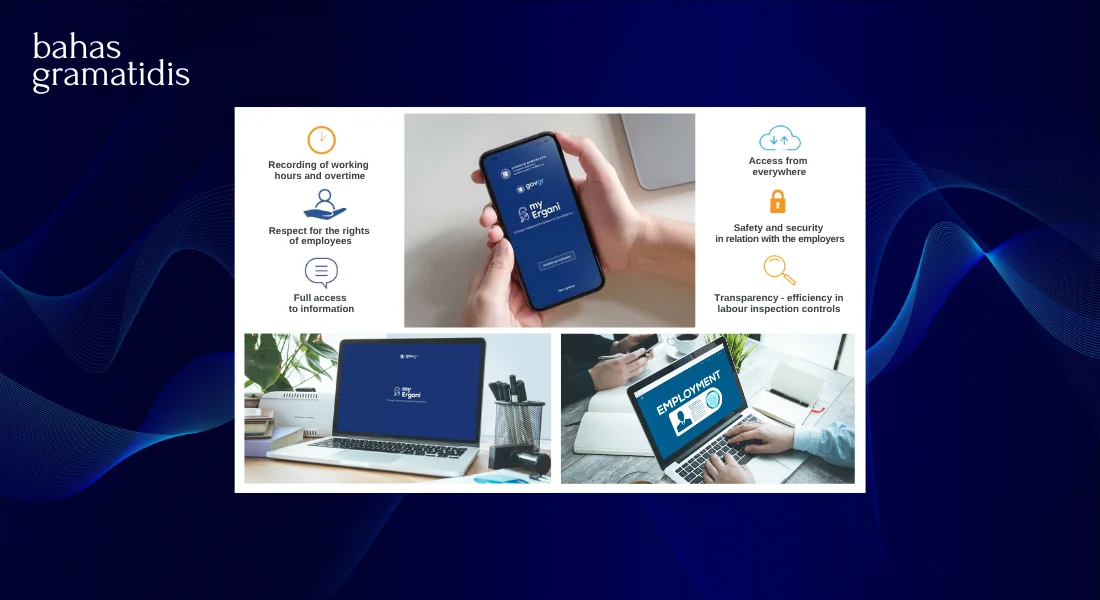
The expansion of the Digital Work Card continues with two new pilot implementation phases, significantly broadening the coverage of employees in additional sectors of the economy.
Phase A of the expansion
The first phase of the new expansion will be implemented on a pilot basis from 2 June to 11 October 2026.
The following sectors are included in this phase:
- Human health activities, such as hospitals, therapeutic and diagnostic centres, excluding doctors
- Employment support activities
- Telecommunications
- Specific service sectors, such as hair salons, beauty centres and dry-cleaning/laundry services
- Services to buildings and landscape activities, mainly cleaning services
Phase B of the expansion
The second phase of the expansion will be implemented on a pilot basis from 29 June to 15 November 2026.
The following sectors are included in this phase:
- Consulting services, advertising and other office-related activities
- Repairs sector
- Warehousing and transport-support activities, including logistics
- Water and wastewater management
- Gambling and betting activities
All enterprises/employers that have been included in the Digital Work Card mechanism are required, from the date of their inclusion, to have and activate a Digital Work Card system for all employees with a dependent employment contract or relationship who work with physical presence at the workplace of those enterprises/employers, regardless of whether their branches fall under included or non-included Activity Code Numbers (KAD), including employees employed by the above enterprises through employee leasing, subject to the exceptions set out below.
For these enterprises, where the employer-enterprise’s main KAD in TAXIS is included in the Digital Work Card and multiple activities are carried out at the same location, some of which have not yet been included in the Digital Work Card, there is now an obligation to apply the mechanism to all of their employees.
EXCEPTION from the application of the Digital Work Card system exists:
For the enterprise as a whole, where:
i. The employer-enterprise’s main KAD in TAXIS does not belong to the sectors that have been included in the Digital Work Card mechanism, even if multiple activities are carried out at the same location, some of which have been included in the Digital Work Card mechanism, or there are branches with KADs that have been included in the Digital Work Card.
ii. The employer-enterprise is included in the Digital Work Card mechanism based on the employer’s main KAD in TAXIS, but that KAD does not generate economic activity, meaning that the activity is zero, as evidenced by Form E3 of the last tax year, and the secondary KAD, which constitutes the dominant economic business activity, is not an included KAD.
For more information you may contact Betty Smyrniou and Melina Korantzani